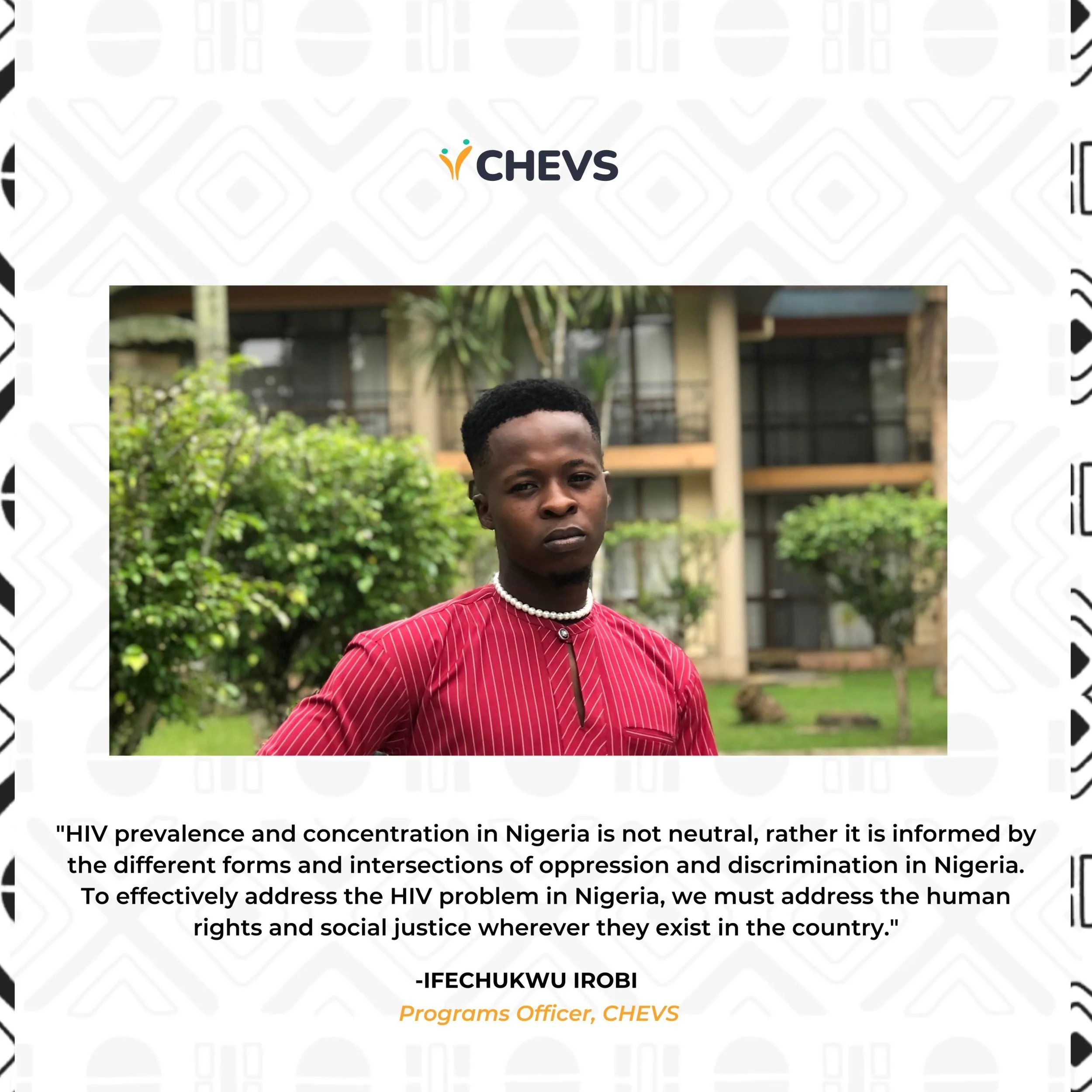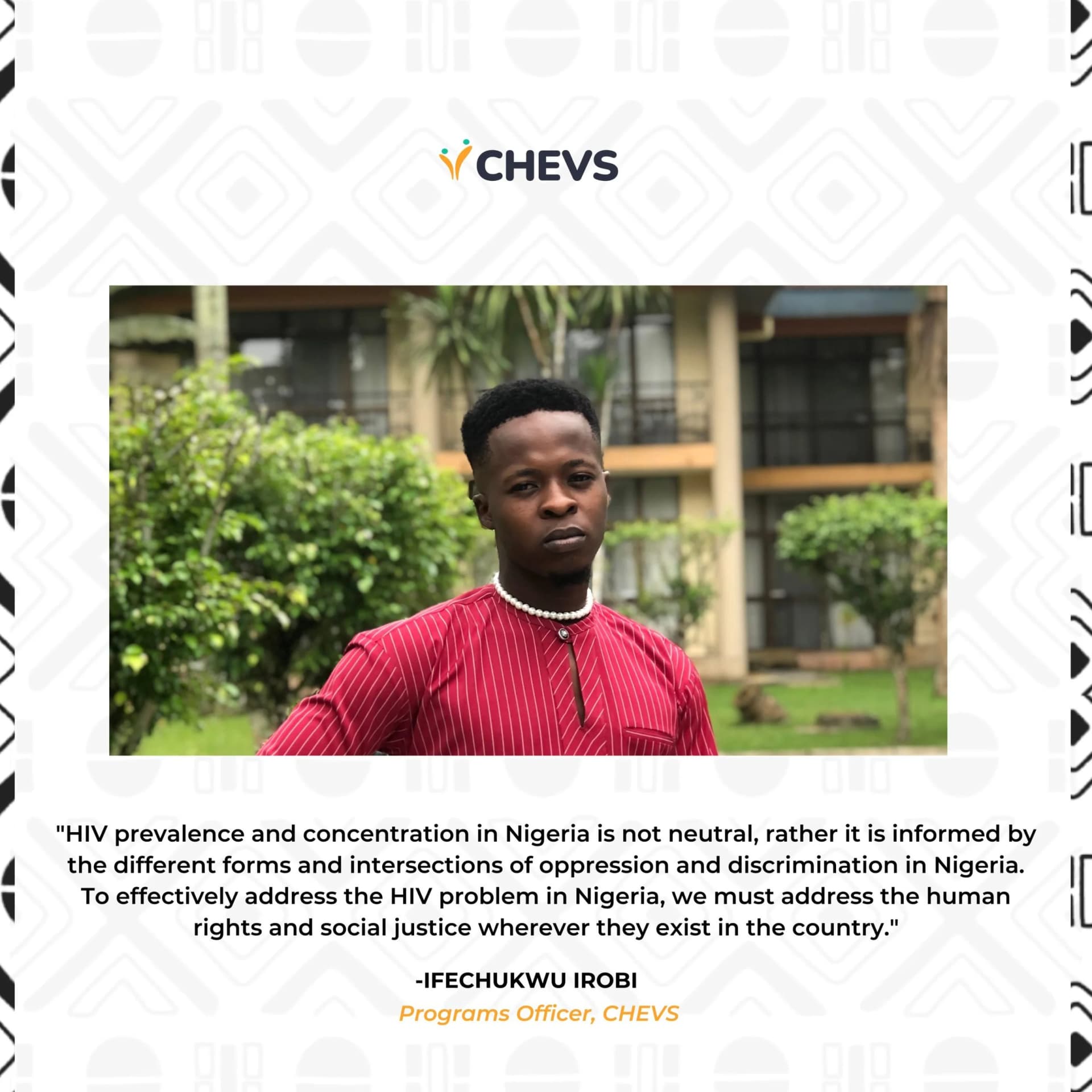
The realities of HIV spread and concentration across Nigeria are largely representative of the different forms and intersections of oppression and discrimination as they exist within and across the country.
The statistics on HIV prevalence across demographics bear evidence to this. While the national prevalence of HIV in Nigeria is at 1.4%, the prevalence and impacts of HIV are much higher in different groups of vulnerable persons that exist at the intersections of different forms of violence and oppression.
25% prevalence rate among men who have sex with men, 16.7% among sex workers, 28.8% among trans people. The prevalence rate amongst women (1.8%) is two times the rate for men (0.9%), and young children aged 0–14 account for more than one-third of all deaths due to AIDS in the country.
These show that HIV prevalence is not neutral, rather that it is informed by sexism, homophobia, gender-phobia, ageism, classism, ableism, and other oppressive systems and ideas prevalent in Nigeria.
In light of these realities, no initiative directed towards HIV programming and control can be complete if it fails to recognise these systems and the way they impact HIV outcomes across demographics.
To effectively address the problem of HIV in Nigeria, we must address discrimination and oppression and the ways they affect inequality in people’s lives and health outcomes.
At CHEVS, we acknowledge the centrality of health to enjoying a dignified life. Improving access to healthcare and addressing the social determinants of health forms a core part of our advocacy strategy.
We do this by challenging ideas and belief systems that allow for discrimination and violence, and that impact the health and welfare of our target communities. Health is both a social justice and a human rights issue.
The failure to address these issues impacts the availability, accessibility, affordability, and adaptability of healthcare generally, and HIV care specifically.
In recent years, Nigeria and the world have recorded unequal success on HIV targets, with failures concentrated among less developed nations and minority populations.
This has resulted in more infections and more AIDS-related deaths. In Nigeria, while ART coverage for the general adult population (>15) is 96%, it lies at 31% for children (0–14), 23.7% for sex workers, 26.3% for MSM, 19.5% for transgender persons, and 25% for people who use drugs.
The theme for World AIDS Day 2022, “EQUALIZE!”, aims to draw attention to inequities across societies that hold back progress on HIV and other healthcare challenges.
CHEVS, in the spirit of this theme, joins its voice in calling for concerted efforts by all stakeholders—government, civil society, businesses, and individuals—to challenge entrenched systems that perpetuate inequality.
We must work to reform harmful laws and policies, challenge harmful beliefs, improve education and access to healthcare, eradicate stigma and discrimination, and involve communities in solutions tailored to their realities.
There is a duty on us all to work toward a healthier, more inclusive, and more equal world for ourselves and future generations. Let us EQUALIZE!